Project-based learning
Units that learn how you teach.
ALF drafts a complete project-based unit in under a minute. Then you teach it, and you change it, the way every teacher does. ALF pays attention to what you change and why, so your next unit starts the way you would have fixed this one.
Free during early testing. Sign in with a Google account. Nothing to install.
How it works
Three steps, in the order a unit actually lives.
Draft
Give ALF a grade, a subject and an idea. In under a minute you have a full unit, not an outline: a driving question, one to six weeks of activities that fit your lessons, a rubric, a materials list, and the standards each week teaches, or your own goals.
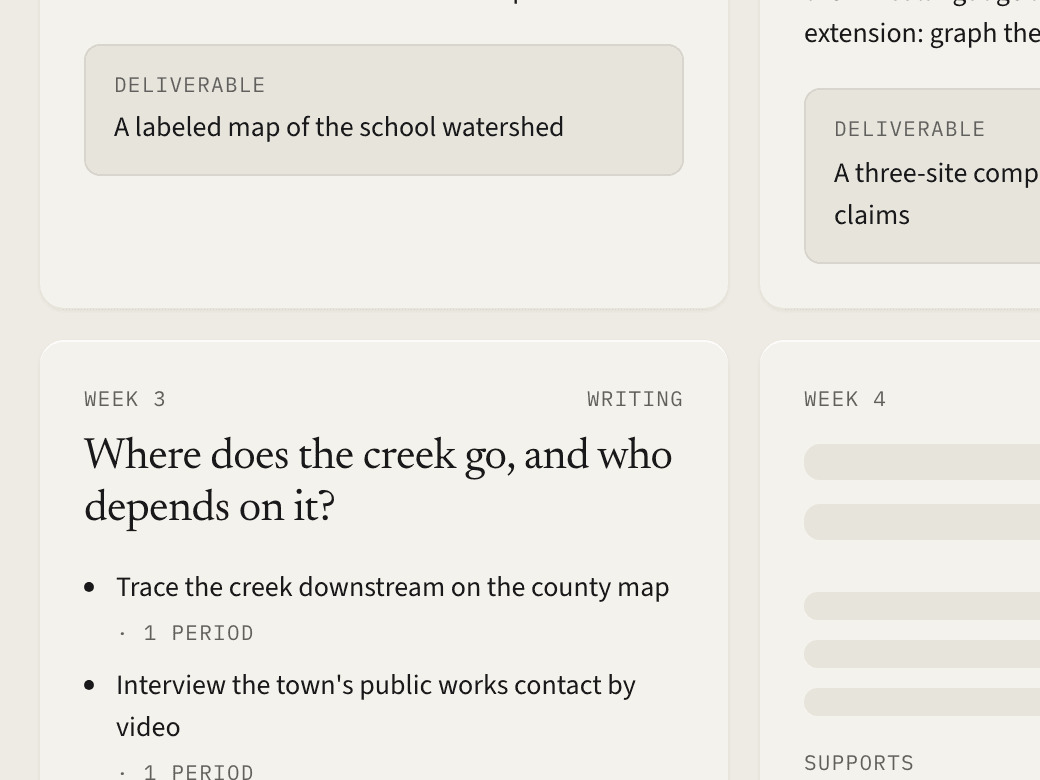
Teach
Week one never goes to plan. Change anything in place: swap an activity, shrink the groups, add a local example. ALF keeps every version, notes what you changed and suggests why. Under any week, Build this week's lessons writes the lessons too: a page for each, with the task sheet and handouts.
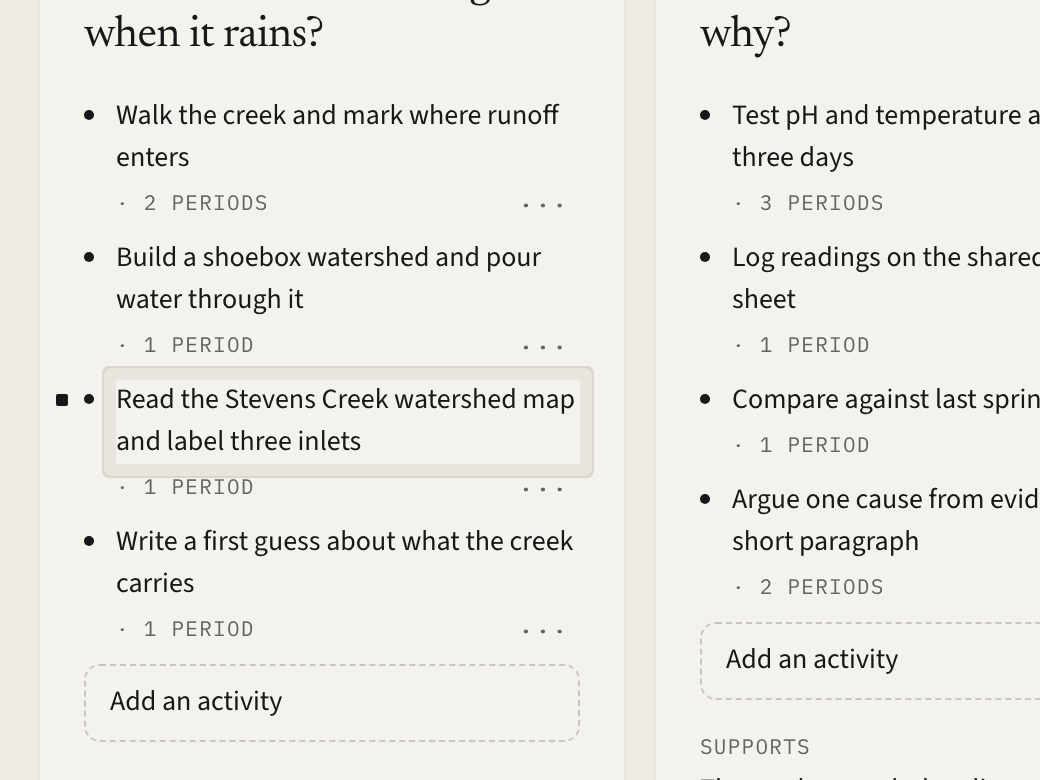
Learns
ALF notices what you change again and again, like groups of three or examples from your town. Your next draft can start there, before you've touched it. You can see what it has picked up, and decide whether it shapes your drafts.
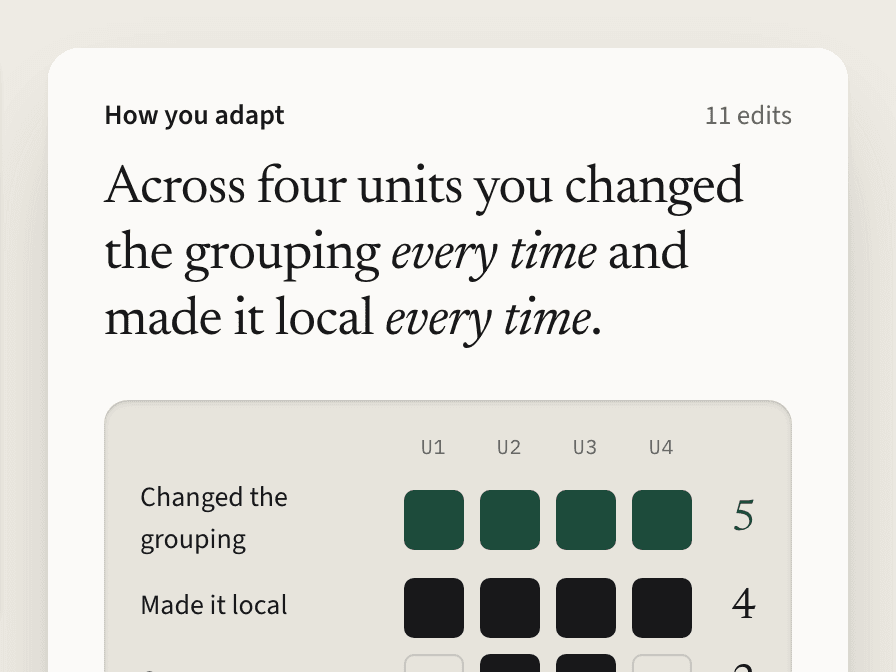
Your next draft already knows
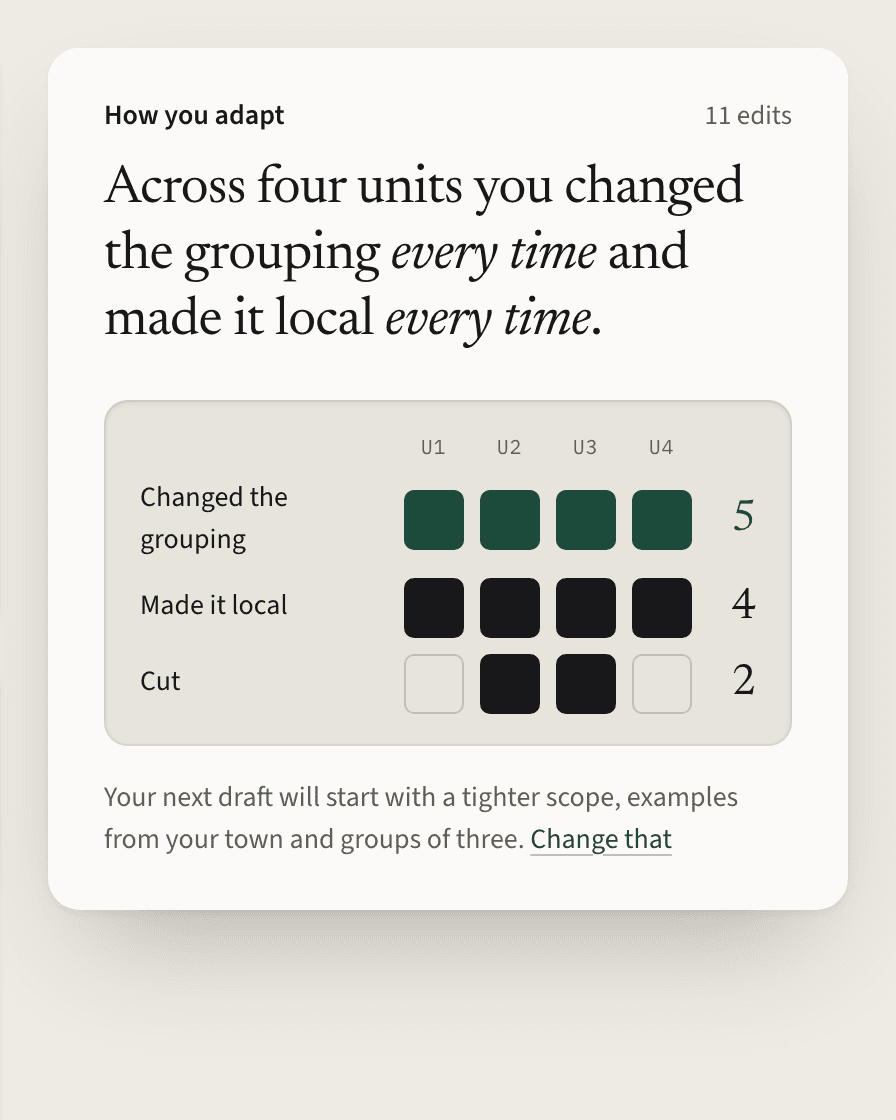
Groups of three, because you changed the grouping in all four units.
Examples from your town, because you made all four units local.
A tighter scope, because you cut an activity in two units.
Most planning tools forget you the moment you close them. ALF keeps a small, visible record of how you adapt units: the patterns, never the students. It can use that record to start your next draft, shows you what it is using and why, and lets you decide, with one switch, whether it shapes your drafts.
The more you teach with it, the less you have to fix.
Standards, from the source
ALF suggests standards from their official sources and shows their official wording wherever the publisher allows, with the notice the publisher requires.
United States
Common Core State Standards for English Language Arts and Mathematics. C3 Framework for social studies. Next Generation Science Standards* (codes, topics and links to the official pages). National Core Arts Standards for the arts: the 11 anchor standards, not the grade-level arts standards.
England
National Curriculum programmes of study and the GCSE subject content for history and geography, across Years 1 to 11. What's covered lists every subject and year.
Scotland
Curriculum for Excellence, Early to Fourth level (P1 to S3), with Technologies and the Expressive arts.
Teachers in international schools pick the curriculum their school follows. More frameworks arrive as their publishers give permission. Teaching another curriculum? Choose the closest one for spelling and year groups, then Use my own goals or No standards. If your subject isn't listed, choose Other subject and type its name, with your own goals or skills.
© Copyright 2010. National Governors Association Center for Best Practices and Council of Chief State School Officers. All rights reserved.
From the College, Career, and Civic Life (C3) Framework for Social Studies State Standards, published by National Council for the Social Studies, Silver Spring, MD (2013).
Contains public sector information licensed under the Open Government Licence v3.0.
National Core Arts Standards © 2014 National Coalition for Core Arts Standards. Rights administered by Young Audiences, Inc. New York, NY. All rights reserved. https://www.nationalartsstandards.org.
What ALF will not do
Five things you should not have to ask about.
Early testing
ALF is being tested with teachers in the United States, the United Kingdom and Dubai, from the first year of school (Kindergarten to Grade 12, Years 1 to 11, or P1 to S3). If you teach and want to try it, sign in with your Google account. There is nothing to install and no card to enter.
Start a unitDaily limits on drafts and lessons keep things fair while we are small.